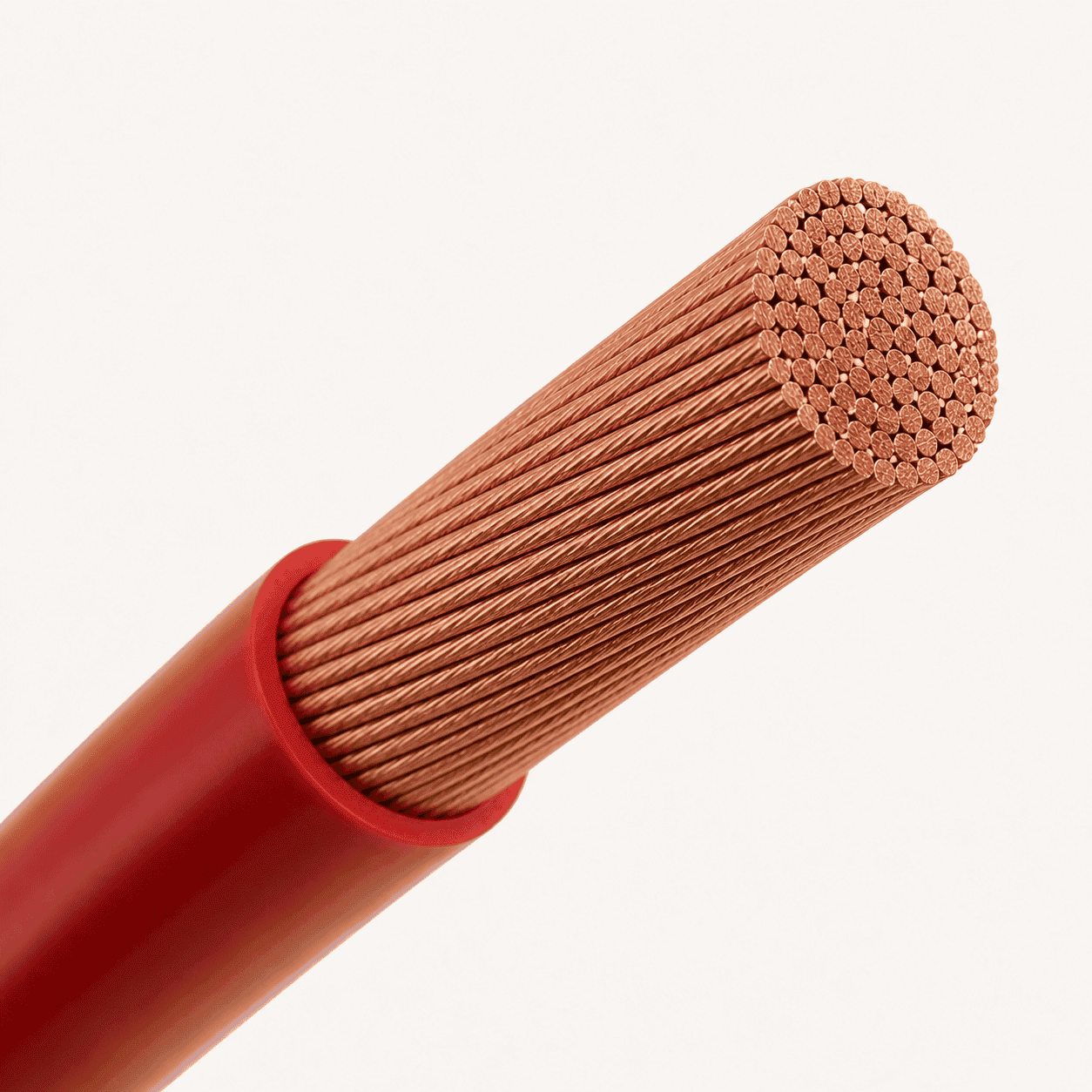
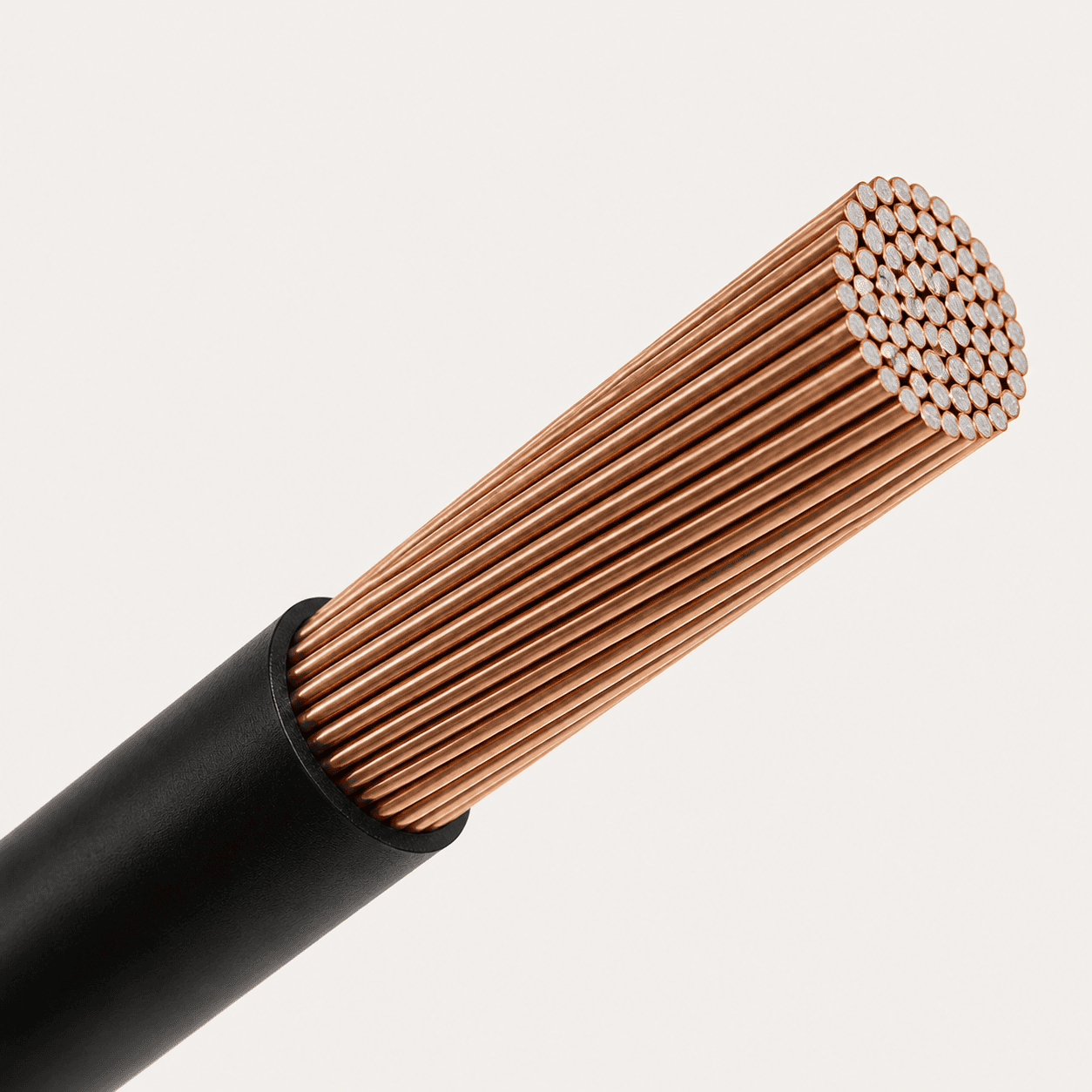
Choose the right speaker wire for clean, dependable power from your amplifier to every pod.
Amplifier power, speaker load, and run length all affect the right gauge for your build.
Good
Most Popular
Better
Best for high power
Wire gauge is not the whole story. Conductor material and cable length matter too.
We have created one-of-a-kind speaker installation kits that include all the components to make wiring speaker pods easy.
Amp to A-Pillar
18-feet / side
Amp to Front-Door
12-feet / side
Amp to Rear-Door
10-feet / side
*These are rough estimates. Your installation technique and vehicle may be different.
Oxygen-Free Copper or Copper-Clad-Aluminum

Better conductivity, less resistance, and dependable current delivery.

Lower cost, lightweight but not as weather resistant as OFC.
16-gauge wire is a dependable starting point for most speaker-pod builds. Only consider 18-gauge for short, lower-power runs and 14- or 12-gauge wire for higher-powered speakers or longer cable runs. Always check the recommendations for your amplifier and speakers.
OFC copper provides better conductivity, lower resistance, longer life and less voltage drop than CCA wire of the same gauge. CCA is more affordable, but it may require a larger gauge to carry the same power effectively. We recommend OFC for dependable performance and higher-powered builds.
Longer cable runs create more electrical resistance, which can reduce the power reaching your speakers. Selecting a thicker wire for longer runs helps limit voltage loss and maintain consistent speaker performance.
Yes, but each wire run should be appropriately sized for the connected speaker, amplifier power, and cable length. For easier installation and more consistent performance, we generally recommend using the same appropriate gauge throughout the build.
Measure the actual route from the amplifier to each speaker location rather than measuring in a straight line. Add all of the individual runs together, account for every speaker in each pod, and include extra wire for routing, connections, and future adjustments.
Speaker-level wiring is generally less susceptible to interference than RCA signal cables, but separating it from the amplifier power cable is still a good practice when possible. If the wires must cross, cross them at approximately a 90-degree angle and keep every cable secured away from sharp edges, heat, and moving parts.