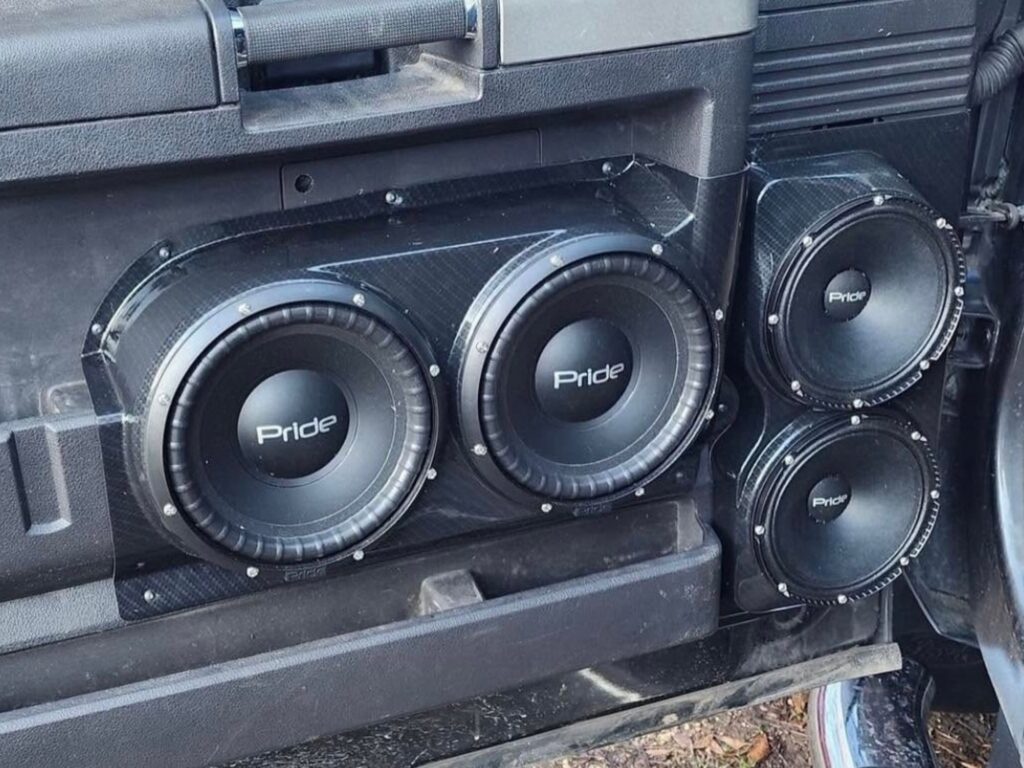
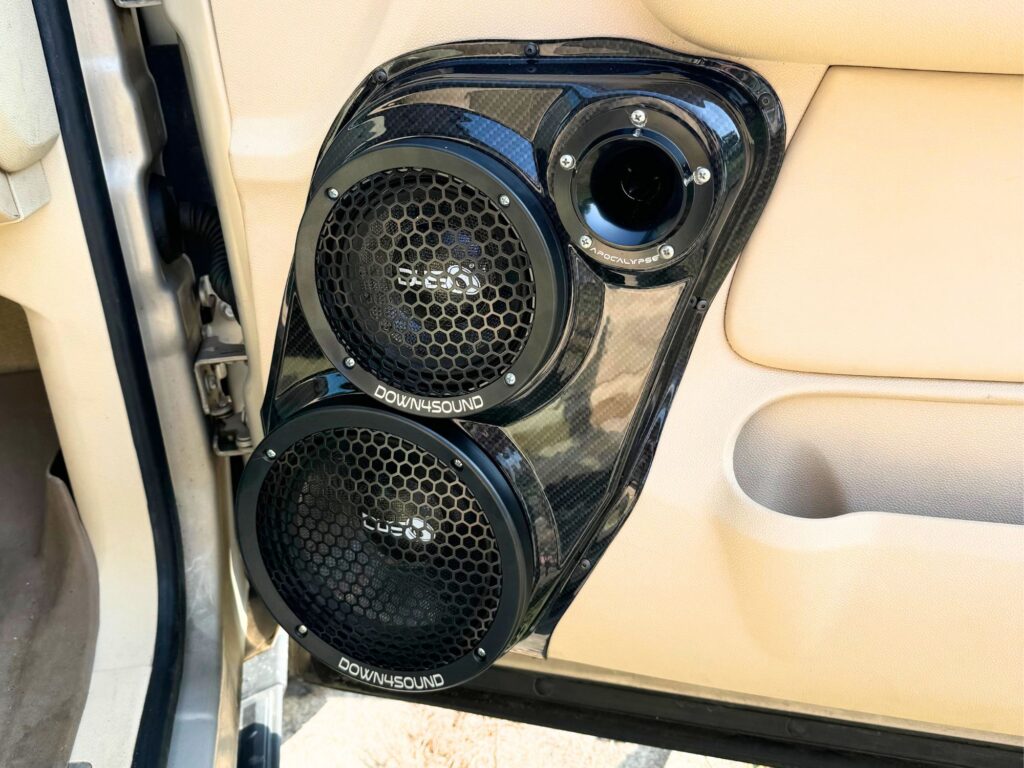
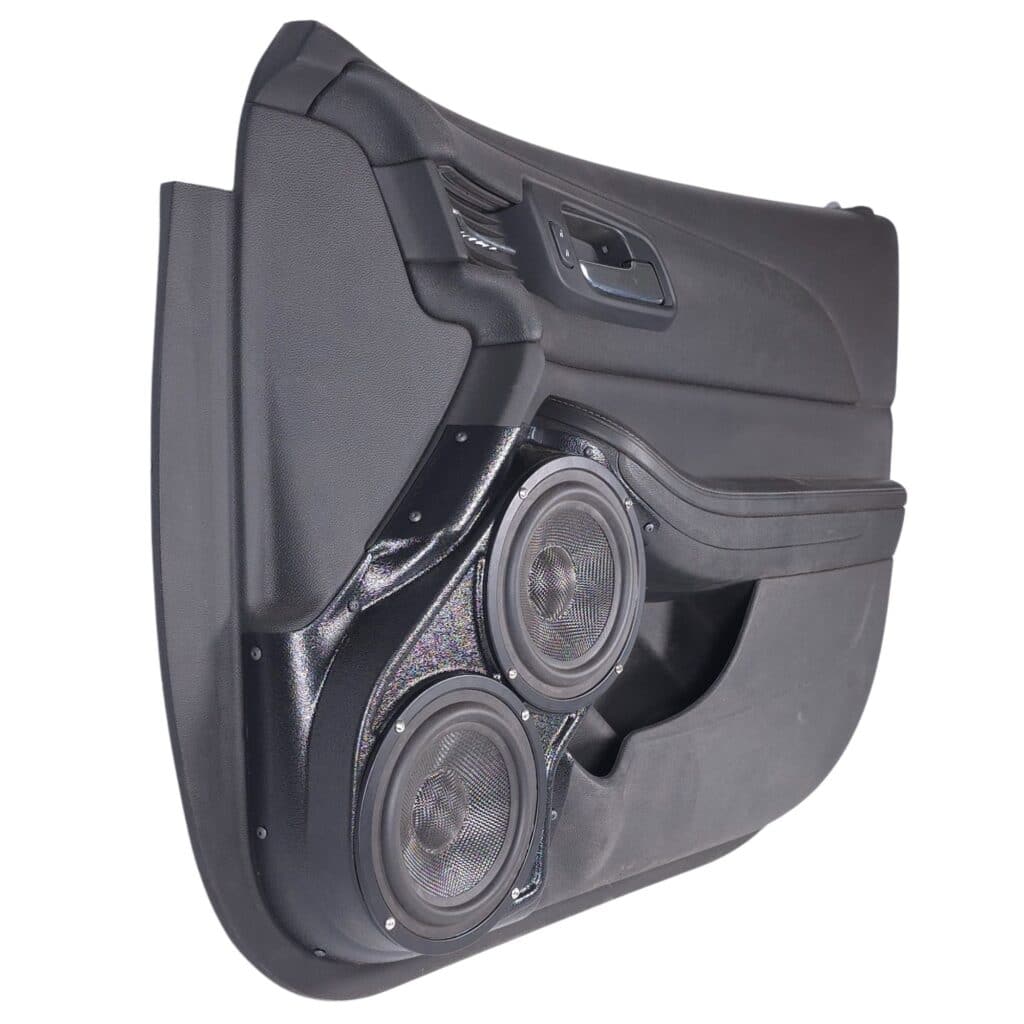
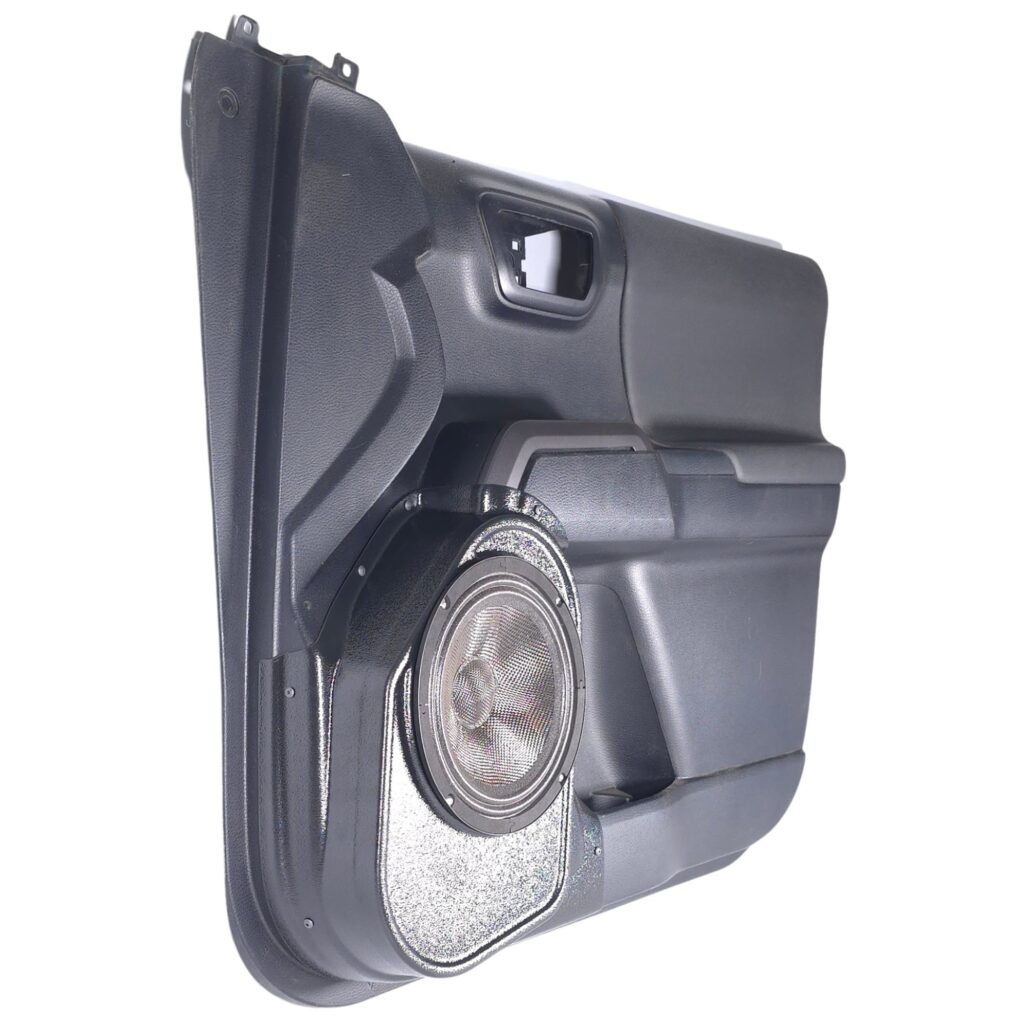
Add larger or additional speakers to the front doors with vehicle-specific pods built to expand your system without starting from scratch.
MORE SPEAKERS. BETTER FIT. LESS FABRICATION.
The front doors carry much of the midbass, lower midrange, vocals, and overall output you hear while driving. Factory panels limit speaker size, quantity, and placement. Front-door speaker pods create room for a stronger, more capable front stage.
One factory opening restricts cone area, output, speaker choice, and upgrade flexibility.
A vehicle-specific pod can add speaker locations and support larger or more specialized driver combinations.
A clean replacement-style upgrade with more driver flexibility than many factory locations.
Purpose:Â
DAILY-DRIVER CLARITY AND A SIMPLE FRONT-STAGE UPGRADE.
The most popular all-around layout, adding cone area for stronger output and midbass.
Purpose:Â
A BALANCED MIX OF OUTPUT, MIDBASS, AND EVERYDAY USABILITY.
A larger single driver for listeners who want more midbass weight without a multi-driver array.
Purpose:Â
STRONGER MIDBASS IMPACT AND FRONT-STAGE PRESENCE.
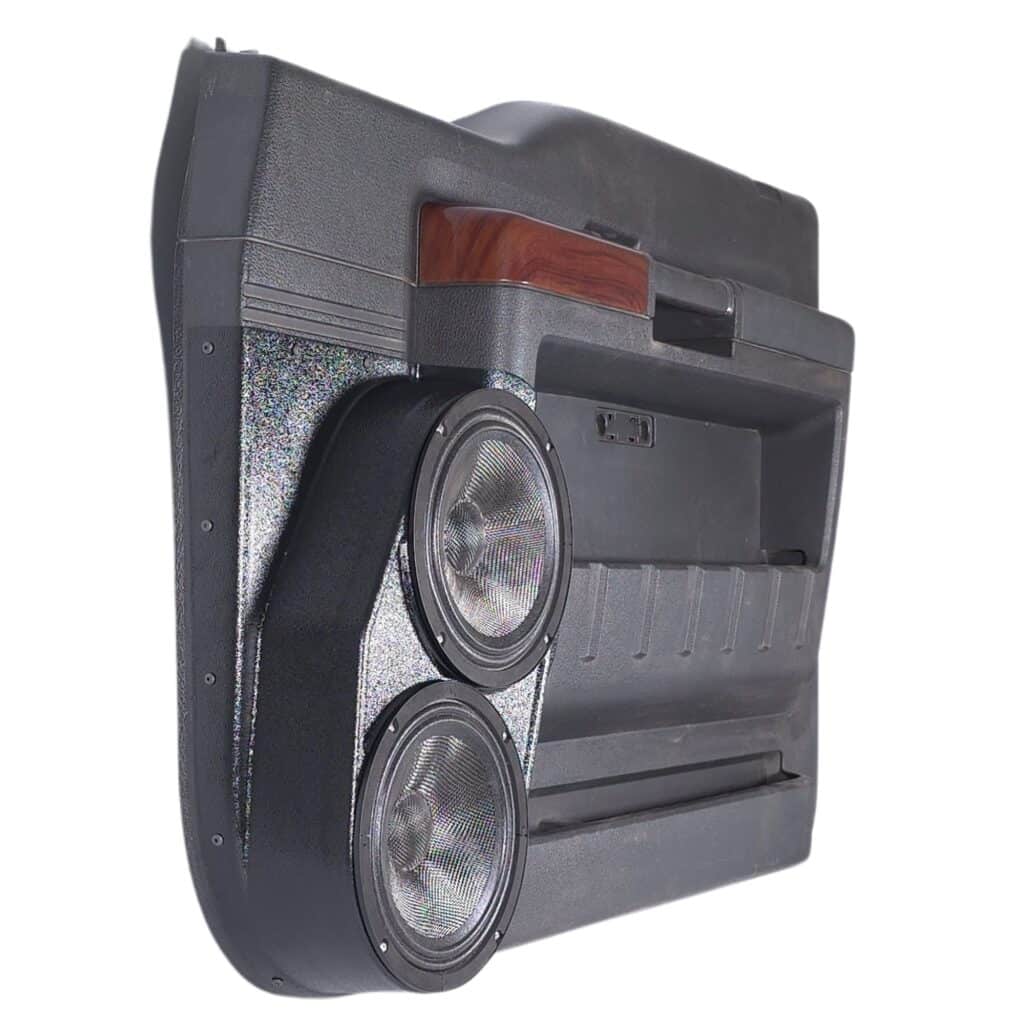
Two large drivers deliver serious cone area for high-output systems and demanding builds.
Purpose:Â
MAXIMUM FRONT-DOOR OUTPUT WHEN THE REST OF THE SYSTEM CAN SUPPORT IT.
Separates midrange and high-frequency duties while keeping the package relatively compact.
Purpose:Â
MORE CONTROL OVER VOCALS, DETAIL AND HIGH FREQUENCY EXTENSION.
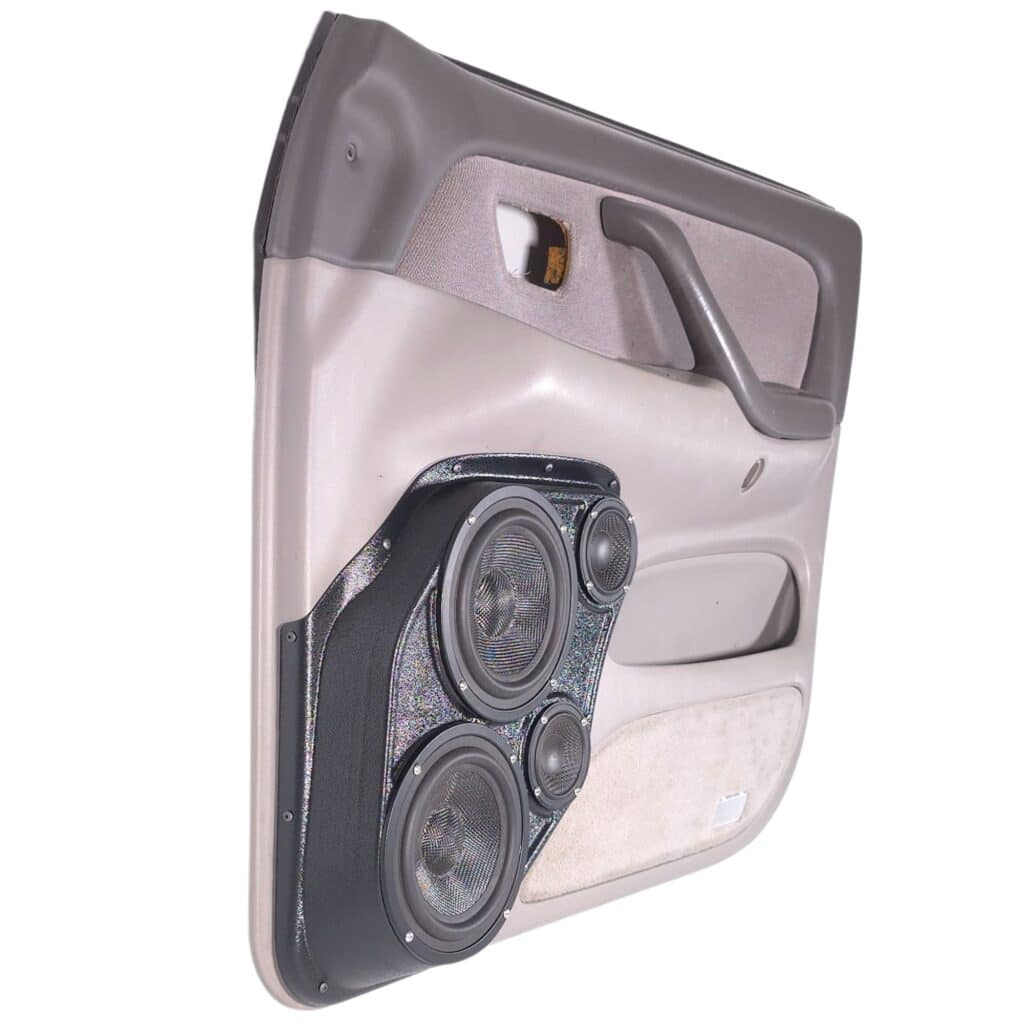
A four-driver front-door layout for ambitious SQL or high-output systems.
Purpose:Â
LOUD FRONT-STAGE CAPABILITY WITH PROPER AMPLIFICATION, CROSSOVER, AND TUNING.
A single 6.5 or 8 can improve capability while keeping amplification and installation simpler.
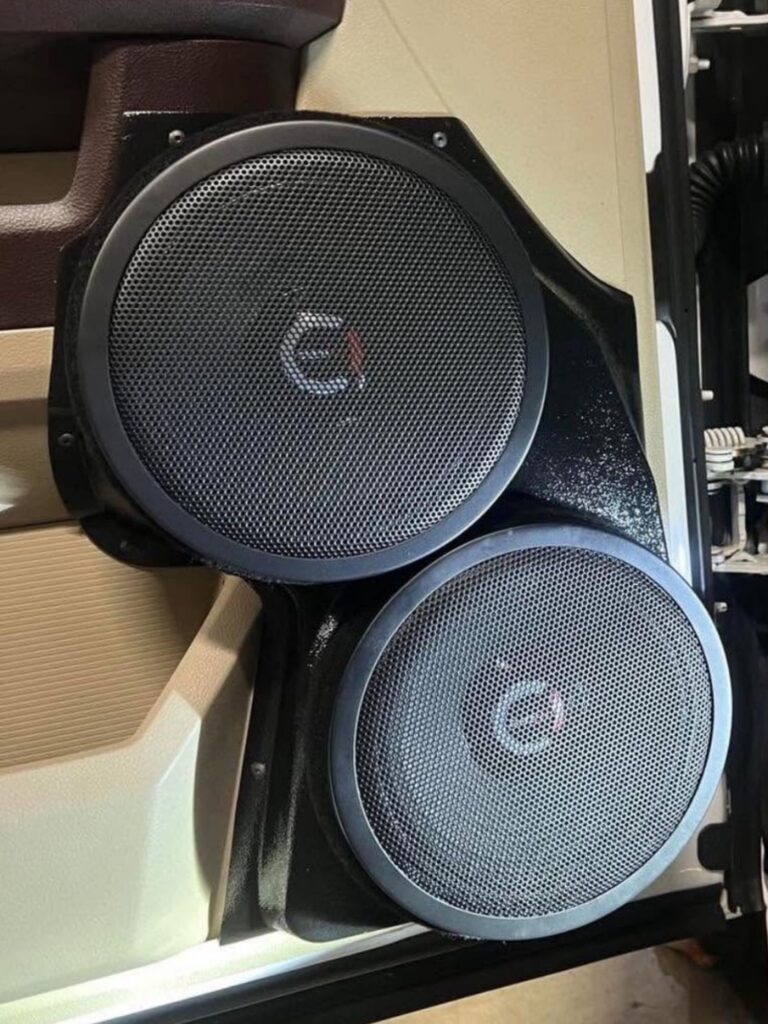
Dual 6.5s or a midrange and tweeter layout can balance clarity, midbass, and useful output.
Dual 8s, three-driver and four-driver combinations add capability but require more power, crossover planning and tuning.
Each application is developed around the useable panel shape, available mounting area, and speaker layout. The goal is more speaker capability, a more integrated appearance, and less fabrication than building a custom assembly from scratch.
Each pod arrives formed for the vehicle application and ready for speaker installation – so you can skip fiberglass, bondo, hazardous fumes, dusty sanding, and hours of shaping and finishing. Many customers install their pods at home using common hand tools and a drill. Review the product-specific notes before starting, as some applications may still require drilling, trimming, wiring, or clearance adjustments.
Compare factory trim to every fitment photo and model note.
Check speaker diameter, depth, grille and mounting requirements.
Define amplifier channels, crossover points, aiming, wiring, and tuning.
Gather your common hand tools and take your time with panel removal, pod mounting, speakers, and wiring.
Start with a formed, finished pod instead of spending nights shaping fiberglass, applying bondo, sanding, and finishing a one-off enclosure.
Front-door speaker pods create space for larger or additional speakers beyond what the factory opening can support. This gives you more flexibility to improve midbass, vocals, overall output, and front-stage capability.
Start with your listening goal, available amplifier channels, speaker sizes, and the configurations offered for your vehicle. A single speaker can work well for a straightforward daily-driver upgrade, while multi-speaker layouts provide more cone area and output but require additional power, wiring, crossover planning, and tuning.
Not necessarily. The advertised speaker size is only a starting point. Confirm the speaker’s outside diameter, cutout diameter, mounting depth, mounting-hole pattern, terminal clearance, and grille requirements before ordering.
Speakers are sold separately unless the product page specifically states that they are included. This allows you to select speakers that match your performance goal, amplifier, and budget.
Most vehicle-specific front-door pod products include one driver-side pod and one passenger-side pod. Quantity one is normally the complete pair, but always confirm the quantity information on the individual product page before ordering.
Many customers install their pods at home using common hand tools and a drill. The pod eliminates the fiberglass, bondo, sanding, shaping, and finishing normally required to build a custom enclosure from scratch. Review the product-specific notes before starting, as drilling, trimming, speaker mounting, wiring, or clearance adjustments may still be required. Complex amplified systems may benefit from professional wiring or tuning assistance.
Confirm the listed model years, make, model, body or cab configuration, and pod location. Compare your factory panels with the fitment photos and review all vehicle-specific notes on the product page. Contact us with your vehicle information and the product link if you are uncertain.
No single component can guarantee the final result. Speaker selection, mounting, sealing, amplification, crossover settings, wiring, sound treatment, and tuning all affect performance. The pods provide a stronger starting point by creating additional mounting options without requiring you to fabricate the enclosure from scratch.
MORE SPEAKERS. BETTER FIT. LESS FABRICATION.