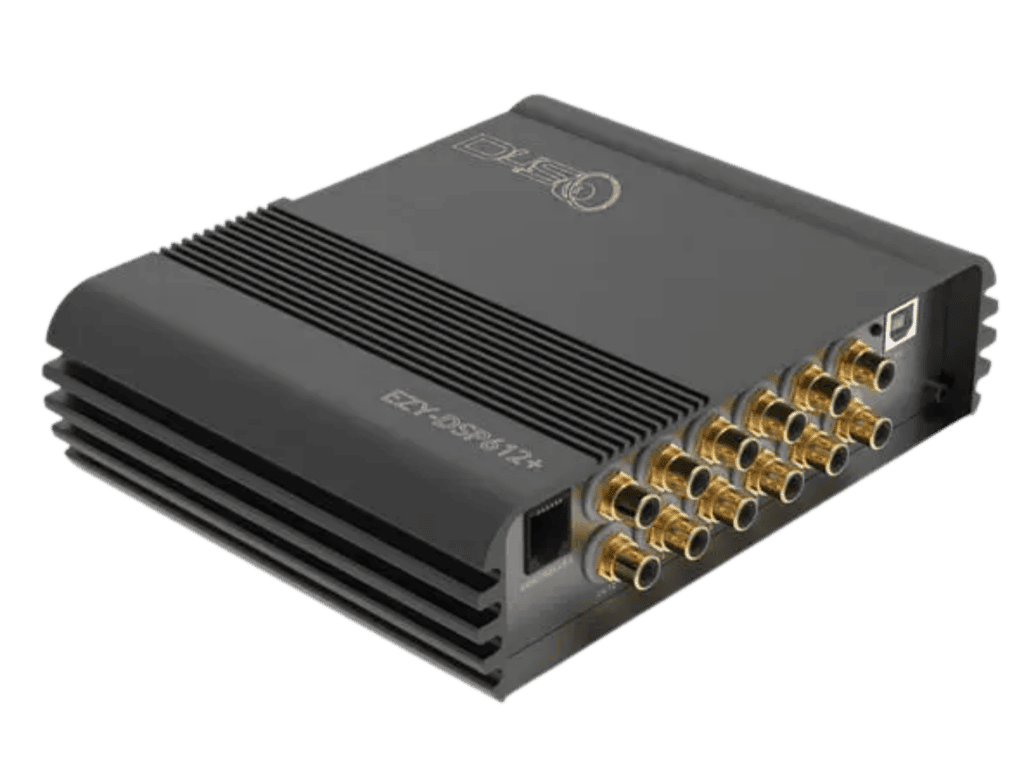
A sound processor manages the audio signal before it reaches your amplifiers. Depending on the processor, it can convert factory speaker-level outputs into RCA signals, restore or strengthen the signal, and provide tuning controls such as equalization, crossovers and time alignment.
You may need one if the factory radio does not provide RCA outputs, alters the audio signal or limits your tuning options. A line output converter may be enough for a simple amplifier installation, while a digital signal processor offers more control for advanced systems.
A line output converter, or LOC, primarily converts a speaker-level signal into an RCA signal that an amplifier can use. A digital signal processor, or DSP, adds more advanced control such as equalization, crossovers, level adjustment, time alignment and signal routing.
Not always. If the aftermarket radio provides a clean RCA signal, the required number of outputs and enough tuning control for your system, an additional processor may not be necessary. A processor can still be helpful when you need more detailed tuning or signal routing.
A properly selected and adjusted processor can help produce a cleaner, more balanced system by correcting signal problems and giving you greater control over the sound. It cannot compensate for poor installation, incorrect amplifier settings or speakers that are being driven beyond their capabilities.
A line driver increases the strength of a low-voltage audio signal before it reaches the amplifier. A stronger signal can help the amplifier reach its intended output with less input gain, but it will not repair distortion or other problems already present in the source signal.
The required channel count depends on the number of source signals entering the processor and how many independently controlled amplifier channels you want to feed. Plan the complete system first, including speakers, amplifiers and any future expansion, before selecting a processor.
Installation requires access to the correct source signals, dependable power and ground connections, and properly routed RCA or speaker-level wiring. Advanced DSP tuning can take additional knowledge and equipment, so professional installation or tuning may be worthwhile for a more complex system.
Some processors can accept the higher-voltage and digitally altered signals found in factory amplified systems, but compatibility varies. Confirm the factory system configuration and compare it with the processor’s input capabilities before purchasing.
Yes, if the processor provides enough output channels for the planned system. A multi-output processor can send separately controlled signals to multiple amplifiers, allowing different speakers or frequency ranges to be tuned independently.