


These are examples from CSP’s catalog, not choices offered for every vehicle. A bigger opening provides room for a bigger driver; additional openings provide room for more speaker area or separate frequency roles. A pod creates the mounting location. The speaker, amplifier, and setup decide how it sounds.
A straightforward way to give rear passengers a proper speaker and add controlled rear fill. It keeps the system simple while letting you choose a driver that fits the pod instead of accepting the factory location. See a single 6.5-inch product example.
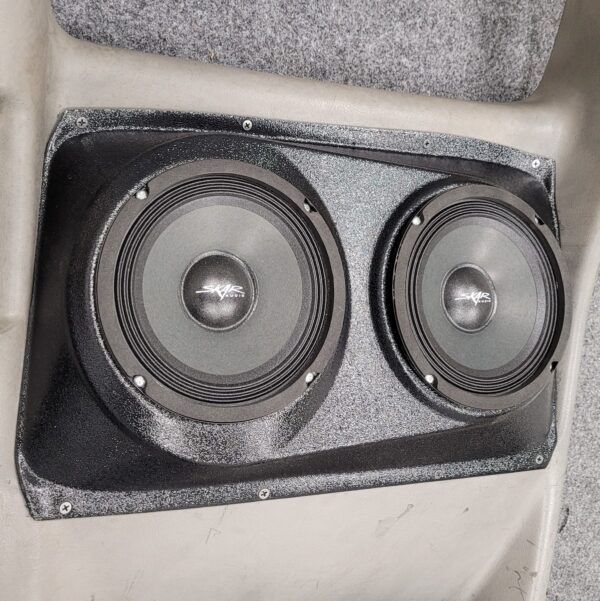
Two 6.5-inch openings offer substantially more cone area than one, giving a properly powered rear system more output potential. This is useful when you want stronger cabin coverage or rear speakers that keep up with a louder front stage and subwoofer. Use a suitable external amplifier and check the planned speaker load. See a dual 6.5-inch product example.
An 8-inch opening makes room for a larger cone that can typically provide more midbass weight than a smaller driver of similar design. It is a way to get stronger rear support without a two-speaker array. The exact low-frequency result depends on the speaker and installation. See a single 8-inch product example.
Two large openings suit a purpose-built high-output system or a larger cabin where substantial rear speaker area is the goal. They can add serious output potential, but need enough amplifier capability, the right drivers, and careful level setting with the front stage. See a dual 8-inch product example.
Some applications offer an even larger single opening. This can support a strong low-frequency or midbass role when the chosen speaker is designed for it. Size alone does not make a door speaker a substitute for a subwoofer. Check the driver’s intended frequency range, mounting depth, and the vehicle listing. The Maverick example shown is designed for a specific Sundown NeoPro 10 model, so do not assume another 10-inch speaker fits. See a 10-inch product example.
A larger speaker can handle body and punch while a smaller midrange or tweeter handles more of the vocal or high-note range. This gives you more control over what the rear system plays, but each driver needs an appropriate crossover, which directs it to the notes it is meant to play. Choose this when your vehicle offers the layout and your system plan calls for separate roles. See a mixed-size rear-door product example.