
FREE SHIPPING ON ORDERS OVER $100**

Custom Speaker Pods guide

Rear Door Speaker Pods Guide

By Chad G. Peterson

Customer-installed rear door speaker pod in a Ford Bronco

Real customer rear door install.

Why add speaker pods to the rear doors

Rear-door pods give you speaker options the factory panel may not have room for. Depending on the layout offered for your vehicle, you can add a larger speaker, a second speaker, or a combination with different jobs. That can give rear passengers clearer music, help the whole cabin keep up with a loud system, or add a gentle sense of sound from behind. Start with your vehicle’s available rear-door pods and choose the result you want.

Decide what the rear speakers should do

Passenger coverage: if people regularly ride in back, rear-door speakers can give them a fuller experience than relying on front speakers alone. Added output: larger or additional rear speakers can help music fill the cabin when the front and subwoofer play loudly. Rear fill: if you prefer a front-focused performance, a quieter rear pair can add presence without becoming the center of attention. There is no single correct rear level; tune it for the seats and listening style that matter to you.

Compare rear-door pod configurations

These are examples from CSP’s catalog, not choices offered for every vehicle. A bigger opening provides room for a bigger driver; additional openings provide room for more speaker area or separate frequency roles. A pod creates the mounting location. The speaker, amplifier, and setup decide how it sounds.
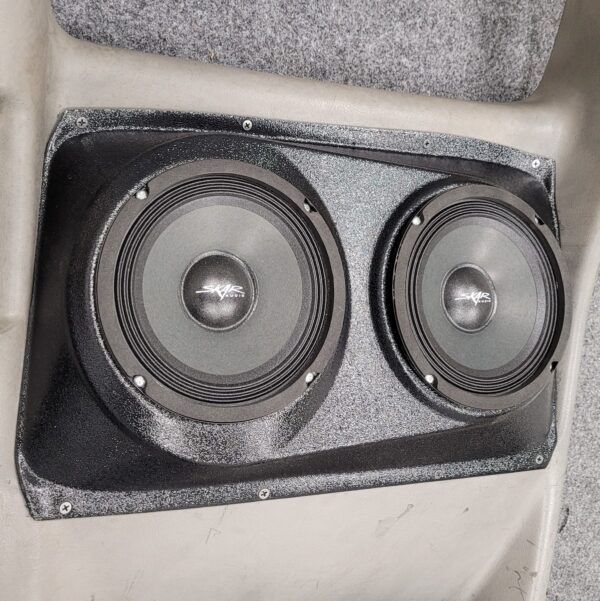
Dual 6.5-inch rear door pod for 2000–2006 GM full-size extended-cab truck
Rear door pod example; available layouts vary by vehicle.

Single 6.5-inch speaker per door

A straightforward way to give rear passengers a proper speaker and add controlled rear fill. It keeps the system simple while letting you choose a driver that fits the pod instead of accepting the factory location. See a single 6.5-inch product example.

Dual 6.5-inch speakers per door

Two 6.5-inch openings offer substantially more cone area than one, giving a properly powered rear system more output potential. This is useful when you want stronger cabin coverage or rear speakers that keep up with a louder front stage and subwoofer. Use a suitable external amplifier and check the planned speaker load. See a dual 6.5-inch product example.

Single 8-inch speaker per door

An 8-inch opening makes room for a larger cone that can typically provide more midbass weight than a smaller driver of similar design. It is a way to get stronger rear support without a two-speaker array. The exact low-frequency result depends on the speaker and installation. See a single 8-inch product example.

Dual 8-inch speakers per door

Two large openings suit a purpose-built high-output system or a larger cabin where substantial rear speaker area is the goal. They can add serious output potential, but need enough amplifier capability, the right drivers, and careful level setting with the front stage. See a dual 8-inch product example.

Single 10-inch speaker per door

Some applications offer an even larger single opening. This can support a strong low-frequency or midbass role when the chosen speaker is designed for it. Size alone does not make a door speaker a substitute for a subwoofer. Check the driver’s intended frequency range, mounting depth, and the vehicle listing. The Maverick example shown is designed for a specific Sundown NeoPro 10 model, so do not assume another 10-inch speaker fits. See a 10-inch product example.

Mixed sizes or multi-driver layouts

A larger speaker can handle body and punch while a smaller midrange or tweeter handles more of the vocal or high-note range. This gives you more control over what the rear system plays, but each driver needs an appropriate crossover, which directs it to the notes it is meant to play. Choose this when your vehicle offers the layout and your system plan calls for separate roles. See a mixed-size rear-door product example.

Make the rear speakers part of the system

For a front-focused soundstage, keep rear level low enough that vocals still seem to come from the front. For passenger coverage or a high-output build, you may prefer stronger rear output. In either case, check the front speakers and subwoofer as a whole system. A rear pod can add useful output, but it does not fix weak front midbass or an overpowering subwoofer by itself. Read How a Car Audio Soundstage Works or the strong-output guide for those goals.

Check fit and plan power

Use Select Your Vehicle to find the rear-door layouts for your exact year, model, body style, and trim. Compare the pod listing with your door panel and the actual speaker dimensions, including depth, grille, and window clearance. Speakers are separate unless the listing says otherwise. For dual or larger layouts, plan suitable amplifier channels and confirm the load in the exact equipment manuals; the amplifier guide and wiring guide explain how. Once the role and fit are clear, explore rear-door pod products.